The concept of time travel has long been a captivating subject in science fiction, from Back to the Future to Doctor Who, sparking imaginations with the idea of traveling through different eras. As children, many of us imagined becoming the next Marty McFly, zooming through time in a DeLorean, encountering future cities, and even saving the past. However, according to leading scientists, some people have already accomplished time travel—though not in the way we might envision it in movies.
Time travel is no longer just a science fiction fantasy. Thanks to the groundbreaking theories of renowned physicist Albert Einstein, time travel isn’t only a possibility, it’s a scientific reality. While we may not have a time machine yet, scientists believe we have already experienced time travel through the principles outlined by Einstein's theory of special relativity. Let's explore how this theory works, the scientific experiments that support it, and how astronauts have unknowingly become time travelers.
Understanding Time Travel Through Einstein’s Theory of Special Relativity
In 1905, Albert Einstein published his theory of special relativity, which would change our understanding of space, time, and gravity. One of the core ideas in this theory is that time does not flow at a constant rate. Instead, time is relative—it moves differently depending on how fast an object is moving in relation to the observer. This concept is referred to as time dilation.
According to Einstein, if an individual is moving at a speed closer to the speed of light, time will pass slower for them compared to someone who is stationary. Essentially, the faster an object moves through space, the slower it will move through time. This idea of time being relative is what makes time travel possible, at least in theory.
While this concept might seem abstract, its implications are profound. It means that if someone were able to travel at incredibly high speeds, they would experience time at a different rate compared to someone who is stationary. This would allow them to travel into the future, in a sense, by outpacing time itself.
The Role of Space Travel in Time Travel
Now that we understand the basics of special relativity, let’s bring space travel into the equation. Astronauts aboard the International Space Station (ISS), for example, are constantly moving at incredible speeds relative to Earth. The ISS orbits the Earth at an average speed of 17,500 miles per hour. This speed is fast enough to cause time dilation—meaning astronauts on the ISS experience time differently than people on Earth.
Time Dilation and Astronauts: Real-Life Time Travelers
When astronauts like Butch Wilmore and Suni Williams spend extended periods in space, they experience time at a faster rate compared to those on Earth. The reason for this is that their speed, while high, still isn’t close to the speed of light, but it is fast enough to create measurable effects. As a result, they age more slowly than people on Earth.
For example, after spending nine and a half months aboard the ISS, astronauts Wilmore and Williams may have felt like they had spent less time in space than they actually did. From their perspective, their time in orbit was shorter because they were moving at such high speeds, and time, as Einstein predicted, moved slower for them.
This phenomenon is also responsible for a well-known study by NASA, known as the Twins Study, which studied the time dilation effect on twins. Astronaut Scott Kelly spent a year aboard the ISS, while his twin brother Mark stayed on Earth. Although the twins were born only a few minutes apart, after a year in space, Scott was actually younger than Mark by a small fraction—approximately six minutes and five milliseconds—due to the time dilation effect caused by Scott’s high-speed orbit around the Earth.
The Science Behind Time Dilation
Time dilation occurs because, according to Einstein's equations, as an object moves closer to the speed of light, the passage of time slows down for that object. This is not a fictional concept—it’s been observed and documented through experiments conducted by physicists. In essence, the faster you travel, the less time you experience. If you were to travel at near-light speed, you could theoretically travel far into the future while only experiencing a short amount of time yourself. Meanwhile, people who remain stationary on Earth would continue aging at a normal pace.
It’s important to note that time dilation becomes most significant as you approach the speed of light. While astronauts on the ISS experience this effect, it is relatively minor, but it has still been enough to be measurable. For instance, during their time aboard the ISS, astronauts such as Kelly and Wilmore spent a larger portion of their time on “space time” compared to those on Earth. This was primarily because they were moving through space at incredible speeds, and as a result, they experienced fewer seconds, minutes, and hours compared to those of us on Earth.
Why NASA Astronauts Are Time Travelers
The concept of time travel becomes particularly interesting when you consider that astronauts are technically engaging in time travel, albeit on a very small scale. For them, traveling in space at high speeds means they are technically moving through time at a different rate than those of us on the ground. NASA’s research into this phenomenon, including the study of the Kelly twins, demonstrates how time dilation is an observable, real-world effect.
In fact, astronauts are not only time travelers because of their speed but also due to their proximity to gravitational fields. The theory of general relativity, also developed by Einstein, explains that the stronger the gravitational field, the slower time moves. This means that astronauts in low Earth orbit, where gravity is slightly weaker than on the surface of Earth, experience time slightly differently as well. It’s a mind-boggling thought: astronauts can age more slowly simply because they’re in a different gravitational field and moving at a higher velocity compared to people on Earth.
Time Travel in the Future: Moving Closer to Practical Applications
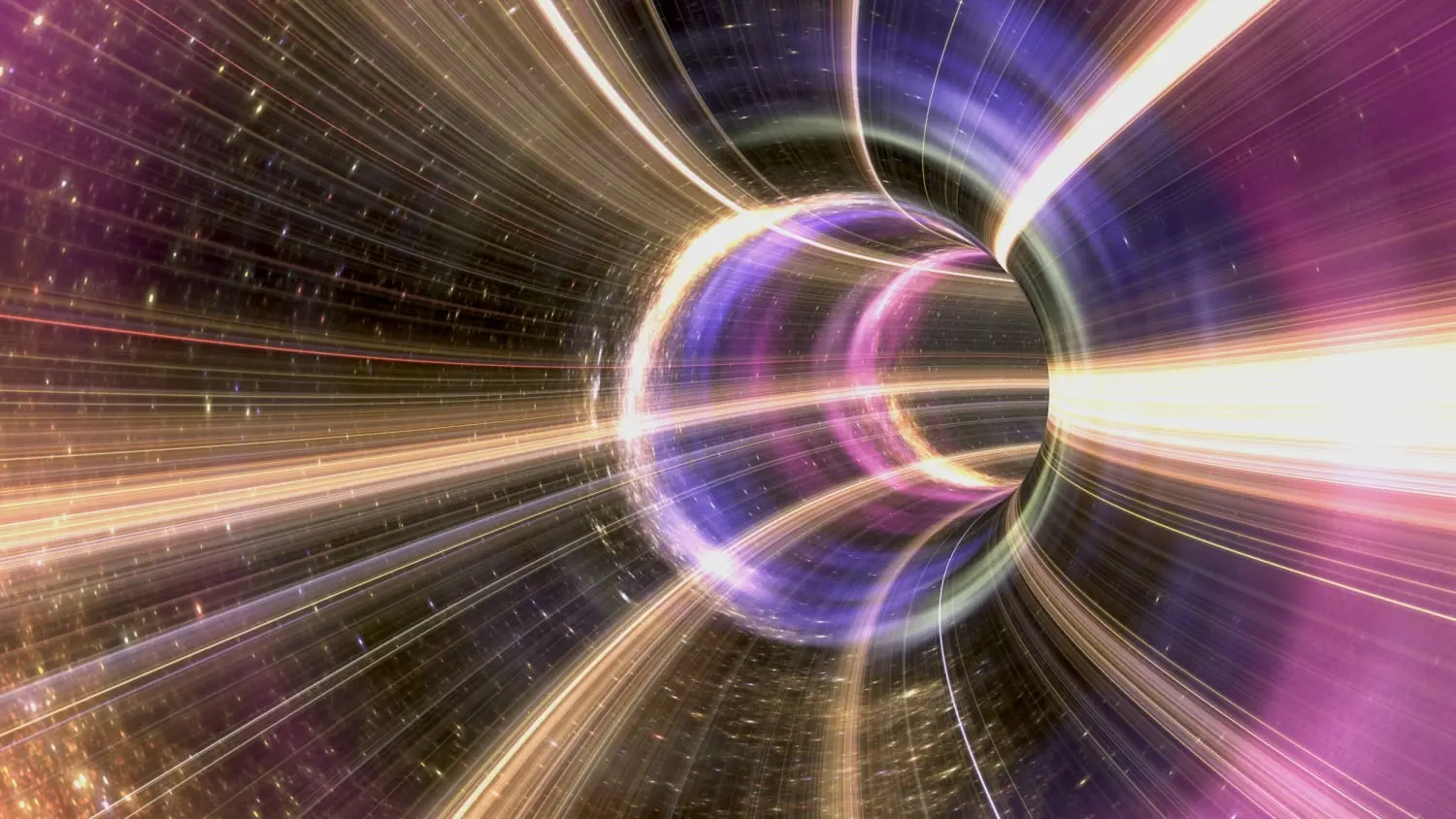
While time travel to the future, as experienced by astronauts, might seem like a far-off concept, advancements in technology could eventually allow us to explore more significant time travel possibilities. Physicists have already theorized about creating devices that could take advantage of wormholes or other space-time anomalies to facilitate travel across both space and time, though these ideas remain theoretical for now.
In practical terms, achieving time travel to the past is still an impossibility with our current understanding of physics. The concept of traveling backward in time faces significant hurdles, particularly around the potential paradoxes that could arise. However, time travel to the future, especially with the help of relativity, is already occurring in small doses through the actions of high-speed travelers such as astronauts.
Time Travel and Its Implications for Our Understanding of the Universe
The notion that we are already experiencing a form of time travel is both fascinating and perplexing. While time travel as we know it in science fiction still remains elusive, understanding the science behind how time functions in relation to speed and gravity opens up new possibilities for exploring our universe. Time dilation, as demonstrated by astronauts on the ISS, may one day become a key part of space exploration, allowing us to travel vast distances while experiencing only a fraction of the time that would pass on Earth.
Additionally, time travel might have profound implications for how we approach technology, longevity, and the future of human civilization. If we could one day harness the effects of time dilation on a larger scale—perhaps using advanced space travel or even artificial intelligence—we could change our perception of time itself and what it means to experience it.
Conclusion: The Fascinating Reality of Time Travel
While we may not have flying DeLoreans or time machines in our backyards, the science of time travel, as laid out by Albert Einstein, is not just theoretical—it’s happening right now. Through the principles of special relativity and time dilation, astronauts have already experienced time travel, albeit in small increments. The next frontier may involve developing technology that allows us to take advantage of these principles to explore space and time on an even grander scale.
For now, we can only wonder what the future holds in terms of time travel. But one thing is certain: science has already taken us one step closer to the impossible dream, and as our understanding of physics and space continues to grow, so too will our potential to navigate time in ways we once thought were only possible in the realm of fiction. Time travel, in its own unique way, is already a reality—and who knows what might come next?