In this deeply emotional story, a mother-in-law learns to truly see her daughter-in-law and stands by her during the toughest moments. A journey of unconditional support, understanding, and healing that transforms their relationship.
I had always thought I understood the role of a mother. After all, I had raised my own son, David, with all the usual care and devotion. But when I looked at my daughter-in-law, Caroline, I saw something different—something I hadn’t fully understood until that day. It was the day everything changed for both of us.
For years, I had been critical of Caroline. Not harshly, but enough to register in my mind that she wasn’t "perfect." She wasn’t like the mothers I had grown up around, the mothers I had compared myself to. She seemed perpetually exhausted, always in leggings, hair messily thrown up in a bun, and the house—well, it looked like a whirlwind had passed through it.
It wasn’t that I didn’t understand the pressures of motherhood. I did, of course. But Caroline’s constant state of tiredness struck me as something... dramatic. How could she let things slip so much? Why was she always so overwhelmed? I couldn’t help but think back to when I was raising my children—David, my son, was always well-dressed, well-fed, and our house was kept orderly. Maybe I was too proud of that, too smug in my own methods. I thought I had it all figured out, and I quietly judged Caroline for her seeming inability to keep up.
She would often collapse on the couch after a long day, baby nestled beside her, eyes heavy with exhaustion. And I’d think, Well, we managed in our day. Maybe I was more resilient. Maybe I’d been better at it. I didn’t say it, but I would think it.
But then, one week, I decided to stay at their house. My son, David, had been traveling for work, and Caroline had asked if I could stay with her to help with the kids. At first, I hesitated—an entire week? But I agreed. I thought, maybe this would help me understand her better, get a better sense of why she always seemed so exhausted.
From the moment I arrived, my perspective shifted.
Caroline was a whirlwind of activity. I couldn’t even keep up. From the moment she woke up, she was on her feet—preparing breakfast, washing dishes, helping the older children with homework, changing diapers, cleaning the house. She hardly had a second to breathe, let alone sit down and relax. I saw it now: it wasn’t just about the chaos of motherhood—it was about the constant nature of it.
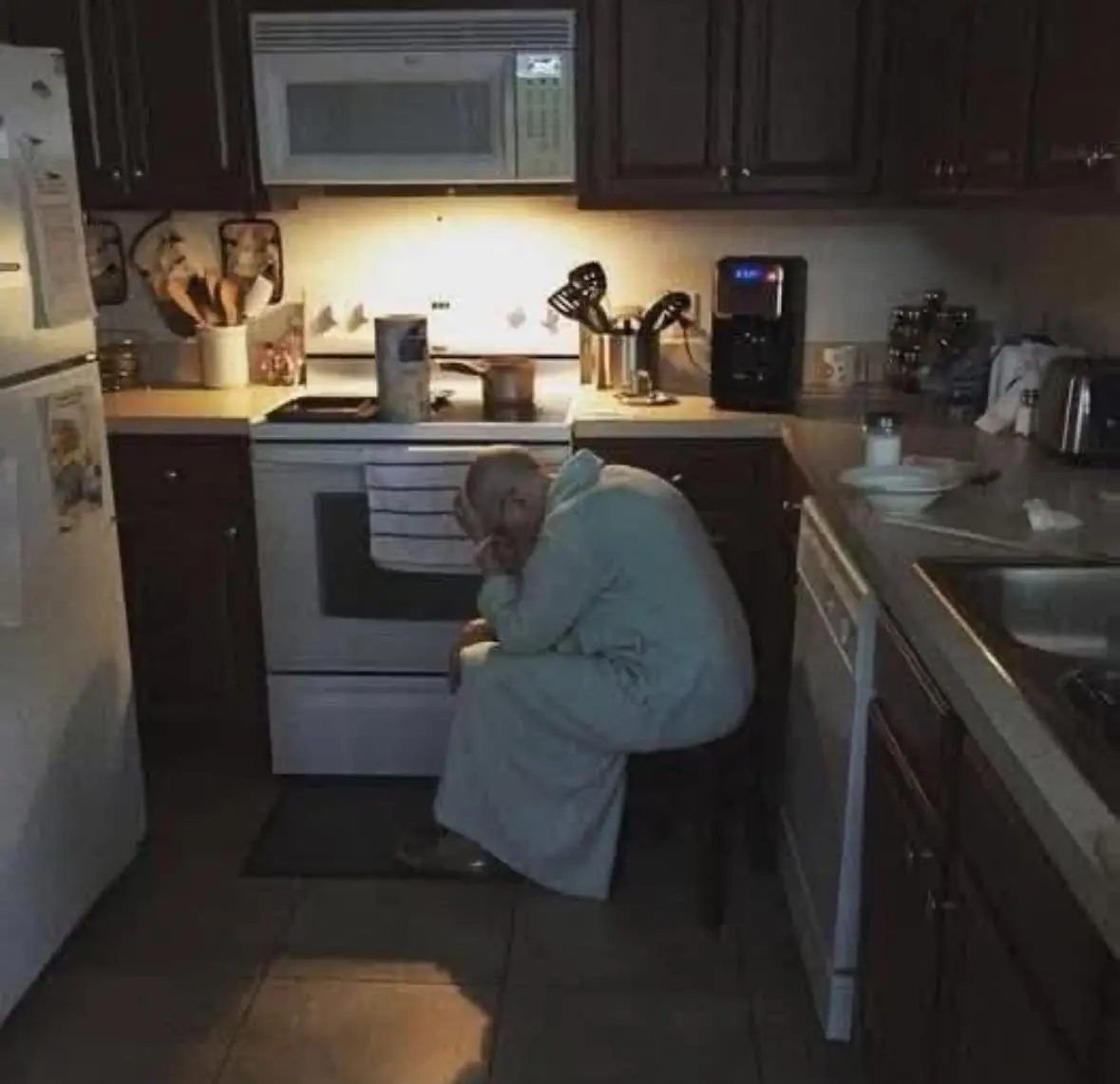
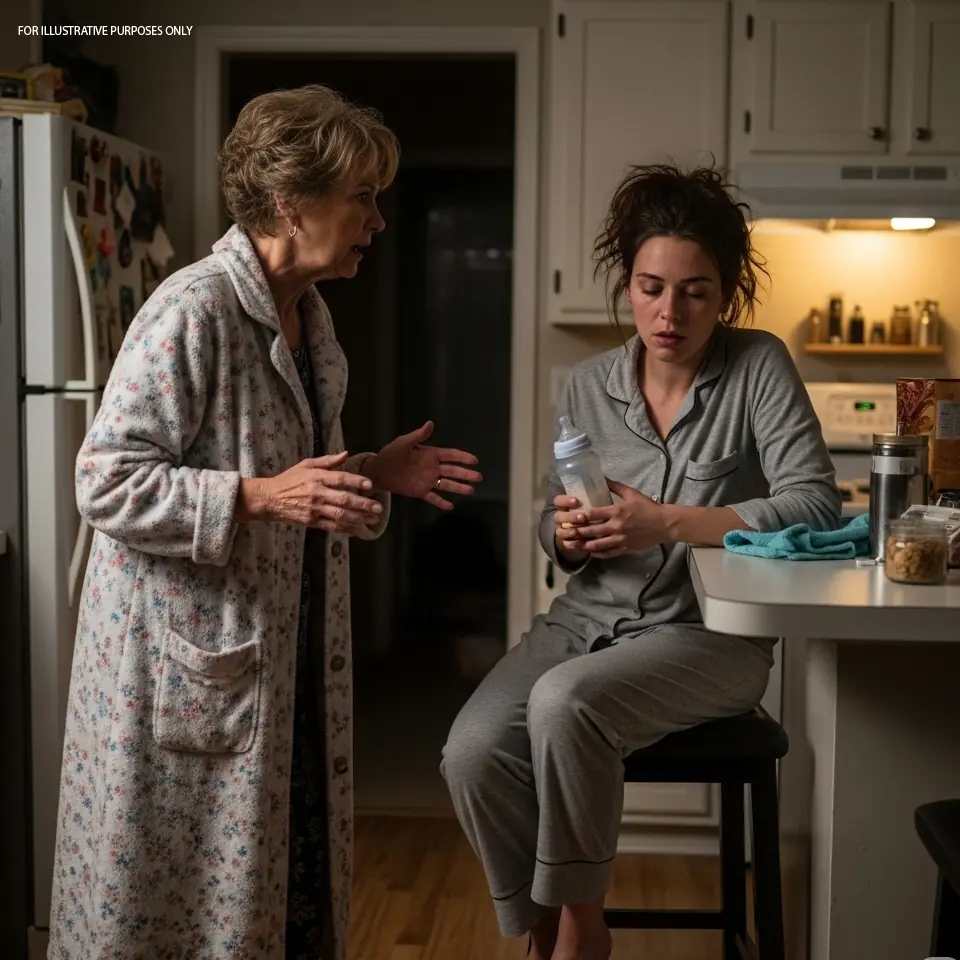
There were no breaks. No moments to herself. I watched her wipe spit-up off her shirt while calmly bouncing the baby in her arms, soothing him when he started to cry. When her younger daughter needed her attention, she never hesitated. Her patience was remarkable. And then, one morning at 4:30 a.m., I woke up to find her in the kitchen, barefoot, bottle in hand, eyes red-rimmed, muttering to herself, “Just make it through this hour.”
I stayed quiet. I didn’t interrupt. I just observed. I felt my heart twist in my chest, realizing how much pressure she was under.
It was in that moment that I understood the depth of her exhaustion. It wasn’t that she wasn’t capable. It wasn’t that she didn’t care. She was fighting—fighting to keep everything together, fighting to be the mother and wife she thought she needed to be.
When she apologized for the mess, saying, “I’m sorry, I wish I could be more presentable while you’re here,” something cracked inside me. She wasn’t apologizing for the house. She wasn’t apologizing for the noise or the clutter. She was apologizing for herself—for not living up to some invisible standard that had been set for her.
I knew then that I owed her an apology too. I wasn’t just an observer. I was part of the problem.
I began to change the way I approached her. I started helping her without being asked—folding the laundry, making breakfast, taking the baby for walks so she could get some rest. I made her tea, sat with her when she cried, not saying much, just holding space.
And with each passing day, I watched her transform. Slowly, she began to let go of the guilt she carried. She started laughing again. She danced around the kitchen with the baby in her arms. She went out for coffee with a friend one afternoon, coming home with a smile on her face. She was beginning to heal.
And then came that fateful day.
It was a Friday afternoon, and I had planned to leave that evening. My bags were packed. I was ready to go back to my quiet house. Caroline was rocking the baby in the living room while I entertained her older children with a game of peek-a-boo.
She looked tired, but there was a different energy in her that day—a spark that I hadn’t seen in weeks. She had finally taken a short nap and had managed to eat lunch while I helped with the baby. Her eyes had a glimmer of life in them, and for the first time in a long while, I could see her.
Then, the doorbell rang.
I watched Caroline stand up, the baby on her hip, as she went to answer the door. I followed her, out of habit, and stood behind her.
A woman was standing there, looking sharp and formal, a badge hanging from her neck.
“Hi, I’m here about the noise complaint,” the woman said, her voice cold.
“Noise complaint?” Caroline asked, her voice shaking.
The woman nodded, flashing the badge. “Yes. We received an anonymous report about screaming, a crying baby at all hours. Concerns about your mental state.”
I felt my stomach drop, a pit forming in my chest. This couldn’t be happening.
“No,” I said quickly, stepping forward. “This is just exhaustion. She’s doing everything she can. The baby’s been colicky, but she’s fine. There’s no abuse here. No neglect. Just a lot of love.”
The woman glanced at me, sizing me up. “And you are?”
“I’m her mother-in-law,” I said firmly. “I’ve been staying here all week. I’ve seen how hard she works. There’s no danger here, just a lot of exhaustion.”
Caroline stood still, her face pale. The baby whimpered in her arms, sensing her mother’s distress.
“Can I come in?” the woman asked gently.
We nodded, and she stepped inside, surveying the room. Toys littered the floor. Bottles were in the sink. Laundry piled on the couch. But there was something else in the room—something she couldn’t see in the mess. There were family photos on the walls. A pot of soup on the stove. There was warmth here. There was love.
She asked a few questions, her tone softening as she observed Caroline’s answers. Caroline’s voice trembled as she admitted to crying sometimes, to feeling overwhelmed, to talking to herself in moments of despair. She spoke of her fears, of not feeling good enough, of worrying she was failing.
The woman nodded, scribbled something on her notepad, and finally said, “Honestly, everything seems fine. These reports happen from time to time, and we have to follow up. But I see no danger here.”
She looked at me. “It might help if she had more consistent support. It’s hard to do this alone.”
“I’ll talk to my son,” I said, my voice steady.
After the woman left, Caroline crumpled to the floor, baby still in her arms. She sobbed, the weight of it all crashing down on her. I knelt beside her, pulling her into an embrace, holding both her and the baby as if that could shield her from the unfairness of it all.
It didn’t matter that the report had been baseless. The accusation itself was enough to shake her. Someone had believed that she wasn’t capable. Someone had judged her for struggling.
Later, when David came home, I told him everything. He was furious at first. Furious with the anonymous accuser, furious with himself for not noticing how much Caroline was carrying on her own. And then, he cried.
“I had no idea it was this bad for her,” he whispered, his voice thick with emotion. “I never realized how much pressure she was under.”
That night, we made a decision. I would stay for another month. I would help with the baby, cook, clean, and sit with Caroline when the nights were hard. I would let her rest without guilt, hold the baby while she took a long bath, read a book, or did nothing at all.
In that month, something beautiful unfolded.
Caroline began to laugh again. She danced with the baby in her arms. She went out with a friend, smiling the entire time. And I watched, awestruck, as she slowly began to stitch herself back together.
One day, she looked at me and said, “You make me feel like I’m not failing.”
I squeezed her hand. “Because you’re not. You’re fighting. And I see it now.”
We became a team. And the distance between us, the silence that had once defined our relationship, began to disappear.
A few weeks later, I received a letter from my own mother-in-law. She was in a nursing home now, but she still wrote with trembling hands. In the letter, she apologized for never being kinder to me when I was a new mother.
“I thought you were messy, distracted, too soft,” she wrote. “But I never told you how hard it was. I never asked how you were. I wish I had.”
I showed the letter to Caroline, who read it with tears in her eyes. “It’s like... full circle,” she said quietly.
It was.
And that’s when I realized that sometimes, the healing we offer to others becomes the healing we never knew we needed.