Alfred Wegener’s 1912 continental drift theory was ridiculed but proven decades later. Discover his incredible story! ❤️🌍
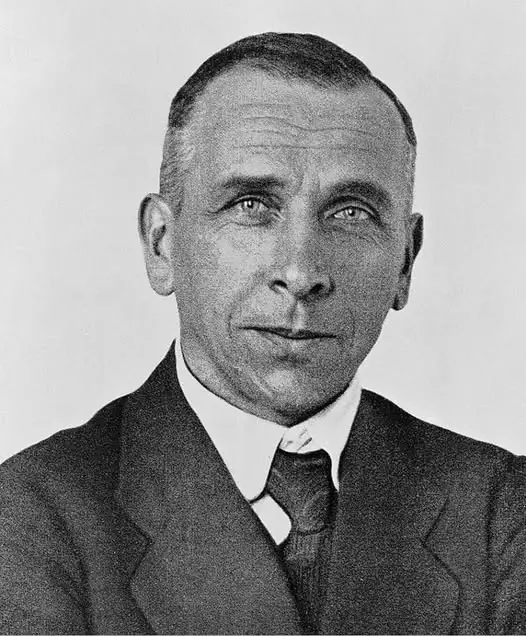
In 1912, German scientist Alfred Wegener faced ridicule for a bold idea that would eventually revolutionize our understanding of the planet: the continents aren’t fixed—they drift. Over a century ago, Wegener proposed his groundbreaking theory of continental drift, observing how the coastlines of Africa and South America fit together like puzzle pieces and noting matching fossils on opposite sides of oceans. He concluded that the continents were once joined in a supercontinent—a concept he called Pangaea—and had gradually drifted apart over millions of years. While his evidence was compelling, the scientific community at the time dismissed his theory as mere fantasy, primarily because Wegener couldn’t explain the mechanism behind how the continents moved.
Despite the rejection, Wegener’s observations laid the foundation for a scientific breakthrough. He noticed not only the jigsaw-like fit of continents but also similarities in geological formations and ancient climate patterns across vast distances—clues that pointed to a shared history. However, without a clear explanation for the movement, his peers scoffed, and his ideas were largely ignored. Tragically, Wegener d!ed in 1930 during an expedition in Greenland, never witnessing the vindication of his work. It wasn’t until the 1960s, with advancements in ocean floor mapping and the discovery of seafloor spreading, that the theory of plate tectonics emerged, confirming Wegener’s hypothesis. This new understanding revealed that the Earth’s crust is divided into plates that float on the semi-fluid mantle beneath, driving continental movement—a mechanism Wegener had lacked but always believed existed.
I can imagine Wegener poring over maps and fossil records, his determination unshaken despite the skepticism, knowing deep down that his observations held a profound truth. Shared by its keeper, this story isn’t just about a scientific theory—it’s a powerful reminder that science isn’t always about immediate acceptance; it’s about uncovering what’s true, even if it takes decades for the world to catch up. Wegener’s perseverance and eventual vindication highlight the importance of questioning established norms and the patience required for truth to rise to the surface.
Today, Alfred Wegener is celebrated as a pioneer of modern geology, his theory of continental drift forming the bedrock of our understanding of plate tectonics. His journey teaches us that visionary ideas, though initially met with resistance, can reshape the world when given time to prove their worth.