Louisa’s small fingers hovered nervously over the piano keys, her brows furrowed in concentration. The soft golden light from the corner lamp bathed our cozy living room, wrapping us in a gentle warmth. Yet despite the calm around us, my heart thumped with a mix of pride and unease. My daughter was trying so hard — so very hard.
I caught my own reflection in the piano’s polished surface and glanced at the framed photo sitting there: Louisa, at five years old, perched on my knee, both of us beaming with joy. That smile was my anchor, my reminder why I fought every day to protect her.
“Take your time, sweetheart,” I said quietly, keeping my voice calm. “You’ve got this.”
Louisa inhaled deeply, shoulders stiff with nerves. “Okay, Dad. I hope I don’t mess up.”
I leaned forward, resting my elbows on my knees. “It’s okay if you do. Just give it your best. All that practice — it shows.”
A tentative smile tugged at her lips, and she began to play. The notes were uneven, a few mistakes here and there, but the effort was pure and real. I clapped softly when she finished, my chest swelling with pride.
“That was wonderful,” I whispered. “You’re getting better every day.”
She glanced nervously toward the piano photo. “Do you think Grandma and Grandpa will like it?”
The question pierced my heart. I forced a smile, not wanting to sow doubt. “I’m sure they will.”
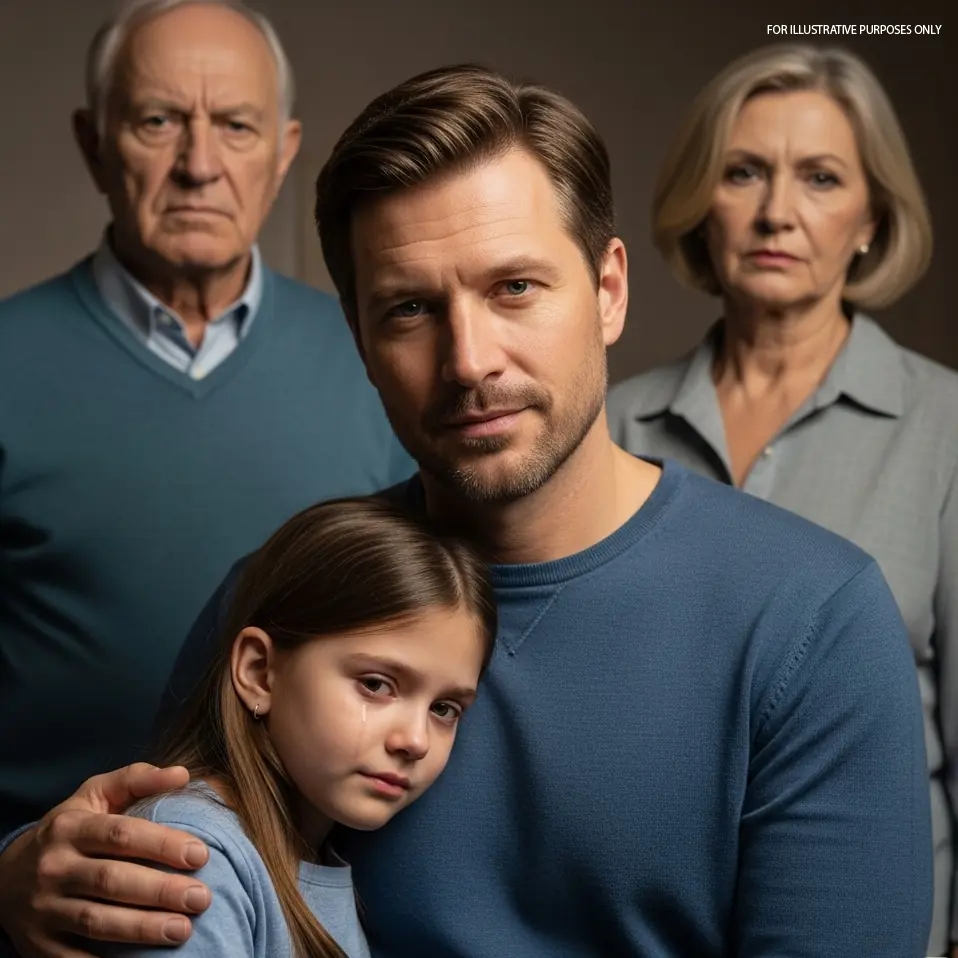
I turned to face my parents squarely, my voice low but unwavering. “I think it’s time for you to leave.”
They froze, their eyes locking on mine as if I had said something utterly incomprehensible. My mother’s lips parted, the faintest flicker of disbelief crossing her face.
“Leave?” she scoffed, tone dripping with thinly veiled contempt. “You can’t be serious, Thomas. This is our home, too. And Louisa is our granddaughter. We have every right to be here.”
My father’s jaw tightened, eyes narrowing with cold judgment. He stepped forward, his voice growing louder, more forceful.
“You’re too soft with her, son. She needs discipline, not coddling. If you keep protecting her from reality, she’ll never learn to survive. You’re spoiling her.”
The words cut deep, echoes of my own childhood ringing loud and clear in that room. The same relentless pressure. The same crushing weight of their expectations.
I swallowed the surge of anger and hurt, forcing myself to stay calm. “I am not spoiling my daughter. I’m protecting her from the cruelty you choose to show. You have a choice. You can be kind, or you can be cruel. Tonight, you chose cruelty.”
My mother’s eyes flashed with indignation. “Kindness? You call this kindness? You’re softening her for the real world, which is harsh and unforgiving. I only want what’s best for her.”
I shook my head slowly, stepping closer, my voice rising with the strength I’d been building for years. “No. What you want is for her to be broken like you were. But I won’t let that happen. I won’t let you tear her spirit apart, piece by piece.”
Louisa sat on the edge of the couch, tears silently streaming down her cheeks. Her small hands clenched tightly in her lap, bracing herself.
My father’s face flushed, and he barked back, “You think you know better? You, who couldn’t stand up to us growing up? Look at how you turned out!”
That was the line I’d been waiting for, the one I’d rehearsed a thousand times in my head.
“Yes,” I said sharply, “I couldn’t stand up then. But now, I can. And I will stand up for my daughter.”
There was a long, heavy silence. My mother’s eyes glistened, as if something had cracked inside her, but she fought to keep her composure.
“I’m only trying to help,” she whispered, voice faltering.
I exhaled, exhaustion washing over me like a wave. “Help isn’t breaking her down. Help is lifting her up. You’ve never done that.”
My father glared, but the fire in his eyes had dimmed slightly.
Then I turned to Louisa, reaching out to gently cup her tear-streaked face.
“Louisa, you did beautifully tonight. Your mistakes don’t define you. Your courage does.”
She looked up at me, her eyes shining with a mix of relief and disbelief.
“Daddy… I’m sorry. I didn’t want to disappoint anyone.”
I hugged her close. “You could never disappoint me. You’re perfect just as you are.”
Days passed, and the house felt unusually quiet without the usual sharp words and heavy silences that had become all too familiar. Louisa and I found a calm rhythm again, but I knew the real work had just begun—not just for us, but for my parents as well.
One afternoon, a hesitant knock came at the door. I opened it to find my mother standing there, her eyes red-rimmed and her hands nervously clutching a small box.
“Thomas,” she began softly, “may I come in?”
I nodded, stepping aside. She entered slowly, the weight of her previous actions etched clearly on her face.
She cleared her throat. “I’ve been thinking a lot about that night. About everything I said… everything we said.”
Her voice cracked, raw with vulnerability I hadn’t seen in years.
“I realized,” she continued, “that I was so focused on what I thought was best, I never stopped to really listen. I never understood how much pressure you were under—how much pressure Louisa feels.”
My father followed behind her, his face softer, the usual sternness replaced by a reluctant openness.
“I was wrong,” he admitted, voice low but steady. “We were too harsh. Not just to you, Thomas, but to Louisa. We let our fears and old ways blind us.”
I looked at them, stunned but hopeful. “Thank you—for recognizing that.”
My mother placed the box on the table. “This is for Louisa. I made it last week. I want her to know she’s loved, even if I didn’t show it before.”
I unwrapped it carefully, revealing a delicate bracelet, simple but beautiful.
“She’ll love this,” I assured her. “But more than that, I want her to see the changes in you. That she’s safe with all of us.”
Over the next weeks, their actions matched their words. The sharp comments were replaced by gentle encouragements. They asked Louisa about her music, about school, about her dreams. They learned to listen—not just hear, but truly listen.
One evening, my mother called Louisa to help bake cookies, her voice shy but sincere. My father attended one of Louisa’s piano recitals, clapping the loudest when she finished, eyes shining with pride.
It wasn’t perfect. There were missteps, old habits that crept back. But the walls were crumbling, brick by brick, replaced with understanding and love.
And Louisa? She blossomed in their warmth. Her confidence grew, her smile returned, brighter and steadier than ever before.
I watched my family transform, realizing that even the hardest hearts could soften, given time, patience, and a willingness to change.
We were still healing, but we were healing together.
And that made all the difference.