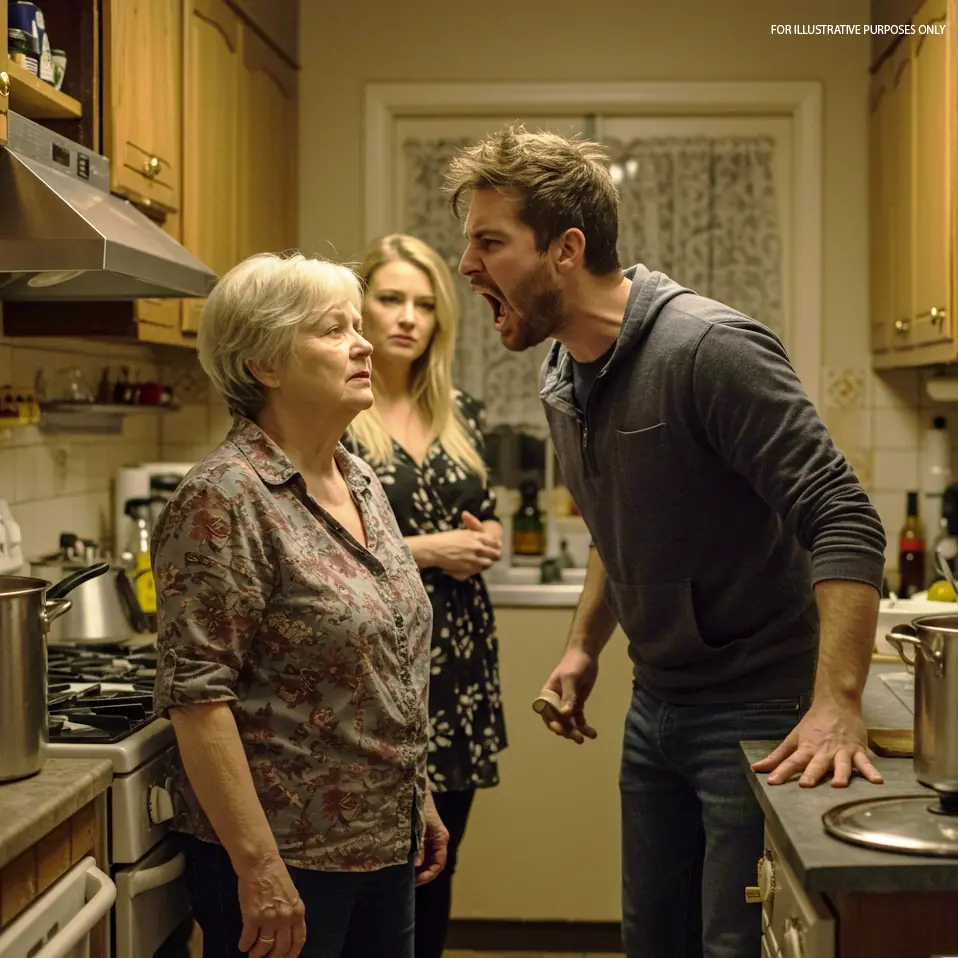
 I had always thought I’d do anything for my son, Nicolas. I raised him as a single mother, juggling jobs, and handling everything life threw my way. His father, Mark, left us when Nicolas was only two. He couldn’t handle the responsibility, and as much as I once loved him, he had been nothing more than a fleeting chapter in my life. I became the backbone of our small family, carrying the weight of everything. I worked dawn to dusk, only to return home to clean, cook, and care for Nicolas. There was no time for complaints, no time for myself—just pure survival.
Nicolas grew up to be a fine young man. But there was one problem: He never truly learned how to take care of himself. Sure, he was capable of playing video games, driving, and doing all the typical things a young adult does, but when it came to basic life skills—cooking, cleaning, managing his own space—he relied entirely on me. At twenty-seven, Nicolas couldn’t even fry an egg without burning it, but I didn’t mind. I loved him, and I had spent all my energy ensuring he was well-fed, well-dressed, and well-cared-for.
Then one day, he told me something that shook my foundation: “Mum, Debbie and I are moving in with you for a bit. Just until we save up for our own place.”
I was taken aback, but it wasn’t the first time Nicolas had needed a place to stay. I thought, surely, this time would be different. Maybe Debbie, his new wife, would be more independent. Maybe she’d help around the house. I’d get a break, take a few days off work, and visit the beach with a friend. Maybe, just maybe, things would finally balance out.
The Sh0ck of Reality
How wrong I was.
Debbie—his wife, the woman he had chosen to spend his life with—was a different kind of challenge altogether. She did nothing. And I mean nothing. At first, I assumed she was just adjusting to the rhythm of our home, but after weeks of watching her lounge in bed, sipping on lattes, and scrolling through her phone while I did everything, I realized she wasn’t interested in helping. The dishes piled up, the laundry never got done, and there was always a layer of dust on the countertops. Every day, I came home to a disaster. The fridge was empty, the kitchen was sticky, and the house felt more like a landfill than a home.
Once, I picked up a plate from the sink, covered in days-old food, surrounded by fruit flies. Debbie had left it in her room. There was no apology, no hint of shame. She had just dropped it off and walked away like it was someone else’s problem. And that was the moment I snapped.
The next day, when I noticed her bringing another dirty mug into the kitchen, I asked, calmly and quietly, “Debbie, have you ever considered washing a dish? Just once?”
She stared at me, then turned around and walked out. That was it. I was furious. I couldn’t keep pretending that everything was okay, so I spoke my mind.
The Fallout
The very next day, without so much as a goodbye, Debbie and Nicolas packed their things and left. I was left standing in the kitchen, staring at the mess they’d left behind, feeling a mixture of anger, frustration, and relief. That evening, Nicolas called. I could hear the coldness in his voice through the phone.
“Mum, why did you have to ru!n our marriage?” he asked, his words cutting deep.
I almost dropped the phone. Ru!n their marriage? I asked her to wash a plate! I couldn't believe it.
“Ru!n it? By asking her to rinse a plate?” I repeated, incredulous.
He didn’t respond. Instead, he hung up, and I haven’t heard from him since.
I could feel my chest tightening. The silence after the call was deafening. The house was quieter than it had ever been. The space I had once filled with the noise of dishes, laundry, and the energy of my son now felt like an empty shell. But as I sat there, I realized something important: I had been carrying this weight alone for years. I wasn’t the one who needed to change. They needed to see the truth about what was really happening.
Regaining My Own Life
The days that followed were peaceful, but they were also filled with a quiet sadness. I missed my son. I missed the connection we once had. But something shifted in me. For the first time, I didn’t feel like the house was my responsibility alone. No more late-night scrubbing, no more silently fuming while they left me to clean up after them.
I spent my evenings reading, binge-watching shows I never had time for, and enjoying the solitude that had once felt like loneliness but now felt like freedom.
Weeks passed. Nicolas didn’t call. But, slowly, I started to feel stronger. I realized I had been living my life for them—picking up their slack, covering for their mistakes—and in doing so, I had lost myself. But now, I was finally finding myself again.
The Unexpected Visit
Then one day, a knock on the door. I opened it, and there stood Nicolas. He looked different—older, more tired. But there was something else in his eyes. It wasn’t anger, like I’d expected. It was vulnerability.
“I’ve been thinking about everything,” Nicolas said, stepping into the house without waiting for me to invite him. “I know you were right. I’m sorry, Mum.”
I stood there, stunned. This wasn’t the confrontation I’d imagined.
He continued, “Debbie and I, we’re trying to figure things out. I don’t know what I was thinking. But I’ve realized that you were always there for me. I took that for granted.”
I didn’t know what to say. I wanted to be angry. I wanted to shout at him for how he had left me to carry everything for so long. But instead, I hugged him. I knew he was finally starting to understand.
“I’m proud of you,” I whispered. “But you have to learn to carry your own weight, Nicolas. Don’t expect anyone to do it for you.”
The Lesson Learned
In the weeks that followed, Nicolas began to show up more often, not just to apologize but to contribute. He helped with the dishes, picked up groceries, and even took over some household chores. But more importantly, he started to understand the value of hard work, the importance of sharing responsibility, and the necessity of being a partner, not just a recipient of care.
Debbie, too, started to change. Slowly, she came around and began pitching in, albeit reluctantly. But it was a start. And for the first time in years, I didn’t feel like I was drowning under the weight of everything.
In the end, it wasn’t just about washing dishes or managing the house. It was about respect, responsibility, and understanding that no one should have to carry all the weight on their own. For the first time in a long while, I felt like I had my life back. Not just as a mother or a wife, but as a person worthy of respect and care.
The real victory wasn’t in their change—it was in mine.
If you can relate to this story, share it. Sometimes, we need to step back, set boundaries, and teach those around us how to respect what we give.