Introduction
Diabetes affects millions, but managing blood sugar doesn’t have to be complicated. The Diabetes Plate Method offers a straightforward way to create balanced, nutritious meals that support stable glucose levels. This method emphasizes portion control and nutrient-rich foods to promote long-lasting energy and overall well-being. Whether you’re newly diagnosed or seeking better control, this guide will help you master the plate method with practical tips and delicious meal ideas.
What Is the Diabetes Plate Method?
The Diabetes Plate Method is a simple visual tool to help people with diabetes build healthy meals that control blood sugar spikes. Your plate is divided into three parts: half filled with nonstarchy vegetables, one quarter with lean protein, and one quarter with complex carbohydrates. Healthy fats are also encouraged to support fullness and stable blood sugar.
This balanced approach helps avoid large amounts of refined carbs, which can cause rapid glucose increases. Instead, combining fiber, protein, and fats slows digestion and stabilizes blood sugar.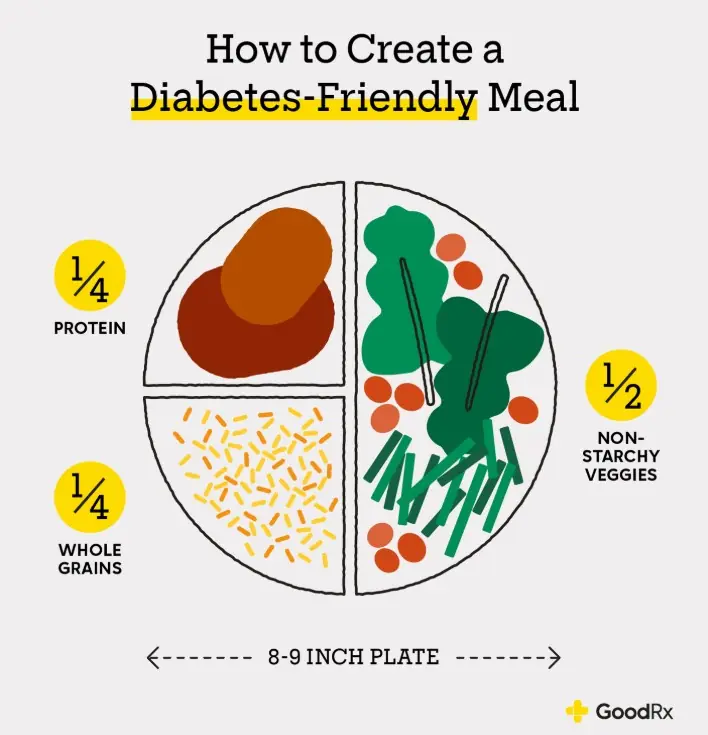
Cre: GoodRx
Step 1: Fill Half Your Plate with Nonstarchy Vegetables
Nonstarchy vegetables are low in calories and carbohydrates but packed with fiber, vitamins, and antioxidants. These veggies help keep you full and promote digestive health without significantly raising blood sugar.
Common nonstarchy veggies include:
-
Broccoli
-
Cauliflower
-
Spinach, kale, collards
-
Bell peppers
-
Zucchini and squash
-
Asparagus
-
Brussels sprouts
Incorporating a variety of colorful veggies adds not only nutrition but also appealing textures and flavors to your meal.
Step 2: Fill One-Quarter of Your Plate with Lean Protein
Protein has minimal effect on blood glucose and provides essential amino acids for muscle repair and metabolic health. Including protein in your meal helps slow carbohydrate absorption and keeps you satiated longer.
Good protein sources are:
-
Lean meats (chicken, turkey, pork, lean beef)
-
Fish and seafood
-
Eggs
-
Plant-based proteins like tofu, tempeh, and legumes
-
Nuts and natural nut butters (in moderation)
Plant-based proteins often contain fiber, further helping glucose control.
Step 3: Fill the Final Quarter with Complex Carbohydrates
Complex carbohydrates digest more slowly than simple carbs, reducing blood sugar spikes. Choosing whole, minimally processed grains and starchy vegetables gives your body steady energy.
Examples of complex carbs:
-
Brown rice, wild rice, quinoa, barley
-
Whole-grain breads, pastas, tortillas
-
Sweet potatoes, winter squash
-
Beans, lentils, chickpeas
Avoid simple carbs like white bread and sugary foods, which cause rapid glucose increases followed by energy crashes.
Step 4: Add Healthy Fats to Your Meals
Healthy fats support heart health and help you feel full without impacting blood sugar. Focus on monounsaturated and polyunsaturated fats.
Sources include:
-
Olive oil
-
Avocado
-
Nuts and seeds (chia, flax, pumpkin)
-
Fatty fish like salmon, mackerel, and sardines
Healthy fats also aid absorption of fat-soluble vitamins found in your veggies.
Step 5: Choose Water and Low-Carb Beverages
Sugary drinks can cause immediate blood sugar spikes. Plain water is the best drink for hydration without calories or carbs. Other options include:
-
Unsweetened tea and coffee
-
Sparkling water without added sugars
-
Infused water with slices of lemon, cucumber, or berries
Limit fruit juices, sweetened beverages, and regular soda to mealtime or avoid altogether.
Sample Meal Ideas Using the Plate Method
Breakfast:
-
Veggie omelet with spinach, peppers, and mushrooms
-
Whole-grain toast topped with avocado or natural nut butter
Lunch:
-
Grilled chicken salad loaded with mixed greens, cucumbers, tomatoes, and olive oil dressing
-
Quinoa and roasted vegetable bowl with chickpeas
Dinner:
-
Baked salmon with steamed broccoli and a small serving of brown rice
-
Stir-fried tofu with asparagus, bell peppers, and a side of barley
Additional Tips for Success
-
Portion control: Use a standard 9-inch plate to help visualize portions.
-
Meal timing: Eat meals and snacks at regular intervals to maintain energy and prevent overeating.
-
Personalize: Adjust the plate based on activity level, medication, and individual preferences.
-
Monitor: Regularly check your blood sugar to see how different foods affect you.
Conclusion
The Diabetes Plate Method is an easy-to-follow tool that empowers you to take control of your nutrition and blood sugar. With a focus on balanced portions and nutrient-dense foods, it allows flexibility and delicious meals while supporting your health goals. Incorporate these steps into your daily routine and enjoy the benefits of stable energy and better diabetes management.